About this transcription.
The only book published by William Roberts is titled Perranporth Cornwall (North Coast) Reminiscences of Perranporth From the Year 1833. Published in 1939, it contains numerous anecdotes relating to that part of Cornwall and, in particular, its idiosyncratic inhabitants during and after the Victorian era.[1]I have (thus far) attempted no transcription of all 192 pages. That will be undertaken only after acquiring the very largest of round tuits. Meanwhile, here are a few pages that I have had occasion to transcribe as, and when, a need arises.[2] It's not an infrequent need - I doubt there is a single page in the book that contains nothing of interest.
Attempts to narrow down every location within Perranporth mentioned by William are hindered by the many changes introduced during the transition from mining town to seaside resort; and these continue to this day. The builder (I cite Tom Tremewan) is still a busy man there. William takes little advantage of the fold-out map at the back to assist his narrative. For him, a thousand words have greater worth than one picture. Frequently, he tries to identify places (that by 1939 had disappeared) with reference to places that have today, in turn, disappeared, been renamed or repurposed. Historic OS Maps assist somewhat.
William writes extensively about the activities of his fellow mine managers, or Mine Agents as they are known in historical records. His father and grandfather were also mine managers. It should be explained that all such were afforded the honorific of 'Captain', in recognition of their duty to manage the ingress of water into the workings. Similarly, all mine depths were expressed in fathoms. In some parts of Cornwall, mine workings actually extended outwards beneath the sea. The economic viabilty of a mine often hinged upon the pumping effort required to keep water out. The demise of Wheal Leisure (page 23) is a case in point.
Needless to say, all hyperlinks are added by me, as well as the
footnotes.[1]
Transcription

FOREWORD.
________
This book is published with the kind co-operation of a Member of Toc H who has requested that any profits from its sale be devoted to the funds of that Movement through its Headquarters at 47, Francis Street, London, S.W.1.[3] To this request my consent is most willingly given.
WILLIAM ROBERTS.
July, 1939.

INTRODUCTION.
This little volume now respectfully submitted may, I think, be regarded as supplying much needed and useful information.Briefly, in opening the subject matter I desire to emphasize that it may interest only such as have taken up their habitation within the last two or three decades. It will be recalled by a very few of us that our forebears and earliest founders and pioneers of some four generations past have long since departed this life, regretfully leaving but oral records, which are now hereditary in form, and much of the history of sections of our county is oftentimes steeped in tradition, myths and fable. Still, no Cornishman would wish them expunged or forgotten.
Several of the original families have died out entirely and there remain the descendants of a few only. (I am one of the third generation and for some little time I have accomplished the allotted span of man, the proverbial three score years and ten).[4] During the mining depression of some decades since, families and single individuals migrated largely to the Colonies, due to free emigration, hence I would endeavour to explain to my patient readers that the putting together of the present lines concerning Perranporth and Parish environs has not been undertaken from choice or desire, feeling somewhat the weight of years and having led an active life, although having set my hand to the work I have derived an immense amount of pleasure in compiling the reminiscences herein embodied, largely culled from memory and with the very able assistance of my hereditary friends and compatriots of my boyhood days, who form a small remaining band, and who have throughout associated themselves with me.
I would ask the indulgence of the reader for the presentation of these Reminiscences as I am unacquainted with the correct modes of the scribes. And should these efforts, or attempted elucidations, give a few hours of pleasant thought and reflection, and enliven with contentment, it will also afford me an inestimable pleasure that the time involved has not been wasted. Apologising for all possible errors with these preliminary remarks, I submit these pages as "Flotsam and Jetsam."
"Who'ere expects a faultless piece to see
Expects what ne'er was, nor e'er will be.
WILLIAM ROBERTS,
For 25 years Member of the Institution of Mining and Metallurgy:
Member of the Institution of Mining and Mechanical Engineers;
and of others.
Lately retired.
Bella Vista,
Perranporth,
CORNWALL.
June, 1933.
PERRANPORTH:
Its nature, position and environments.
________
A renowned student of the science of Geology in his elementary teachings has made the following assertions:—
The Kingdoms of Nature:
Science, in her survey of the earth, has recognised three kingdoms of nature: the animal, the vegetable and the inorganic; or, naming them from the forms characteristic of each, the Animal Kingdom, the Plant Kingdom, and the Crystal Kingdom. An individual in either Kingdom has its systematic mode of formation or growth.
The Plant or Animal, (1) endowed with life, (2) commences from a germ, (3) grows by means of imbibed nutriment, and (4) passes through a series of changes and gradual development to the adult state, when (5) it evolves new seeds or germs, and (6) afterwards continues on to death and dissolution.
It has, hence, its cycle of growth and reproduction, and cycle follows cycle in indefinite continuance.
The Crystal is (1) a lifeless object, and has a simpler history:
it (2) begins in a nucleal molecule or particle; (3) it enlarges
by external addition or accretions alone: and (4) there is,
hence, no proper development, as the crystal is perfect, however
minute: (5) it ends in simply existing, and not in reproducing;
and (6), being lifeless, there is no proper death, or necessary
dissolution.
• Such are the individualists in the great Kingdoms of
nature, displayed upon the earth.
I fancy I can hear it voiced: "What has this to do with Perranporth"? The reply is, it has as much to do with Perranporth as with any other part of this globe — it is a vital definition of life, propagation and dissolution, and everything which appears in a created world comes into being and progresses on the same recurring system.
The Duchy of Cornwall, with its geographical peculiarities of attachment to the Mainland, is, of course, a peninsula - the anciently named promontory having two horns on its extreme western extremity abutting on the coast of France.
It has been appropriately re-christened "The Cornish Riviera" and, on account of its situation, its long diversified coastline, ready access from inland, its temperate climate and ozone from the western Atlantic, is patronised by an ever-increasing annual influx of holiday-makers and health seekers.
Perranporth has singular attractions in association with the coast, the variety of scenery, most attractive hills and valleys, the extensive flora in the hinterland being largely due to the southern latitude, but in a measure also to the proximity of the Gulf Stream which accounts, no doubt, for the almost tropical verdure during the season.
Well-merited attention has been received by Perran-porth from those who have visited it - many on the recommendation of medical practitioners and health associations - and who have benefited by a sojourn in this seaside resort.
The "guides" and pamphlets, periodically issued, fully describe the general scenery and enable strangers easily and readily to find their way about.
During the last ten years more especially, Perranporth has sprung into prominence and has now reached the dimensions of a commodious seaside town, It is continually being extended from its recognised centre and the number of permanent residents is ever-increasing, having
The outstanding features of the beach are its openness, regularity of surface and absolute absence of isolated rocks, so often prevalent elsewhere. The almost unrivalled expanse of yellow sand — a practically level plain extending east and westwards for a length at low tide of approximately three miles, with a breadth of about a quarter of a mile between low ebb and nominal high flow of the tides— has been considered unsurpassed for the sport of sand yacht sailing.
The "surf board" for riding on the surf, has of late years become part of the bathers' outfit. By its strength and impetus the body, lying perfectly rigid and flat on the board, is swiftly rushed onward to the shallows of the sand beach. The sport is very fascinating and exhilarating, so much so that it is exceptional to see even one of the hundreds of daily bathers lacking this accompaniment.[5]
I think I should be correct in stating that the inauguration in Cornwall of this class of surfing was at Perranporth, although its place of origin, many years ago, was the east coast of Cape Colony.
This sport can be indulged in with safety and pleasure only on flat beaches, the chief requirement being the aptness, acquired by experience, of judging the exact moment to duck with the surf board on the advancing broken surf, so as to attain the longest reach, or single run, to the broad and extended waters.
In contrast to this, it will readily be conceived that on a beach reaching steeply towards the sea the breaking surf would be intermittent, the waves closely following one upon the other, which would in no wise be favourable for surfing.
The large and interesting caverns, produced by erosion, which occur irregularly along the shore cliffs, are readily accessible on beach level during receding tides.
In addition the association of silver with galena is very pronounced in these lead lodes and is found native as well as in the mineralised state. The first discovery of ores was at Wheal Mexico Mine where it occurred in nests of chloride and native.
The Great Perran Iron Lode, from its persistent con-tinuity, its great width and the mass of mineral matter which fills it, is held to be the most remarkable lode in the west of England. It courses up the cliffs at Ligger (eastern end of Perran beach) in a ruddy mass some 70 feet in width and extends in a south easterly direction through Gravel Hill, Treamble, Duchy Peru, Deer Park, Fiddler's Green to Mitchell, a distance of seven miles, and although undisclosed at the surface it may well be assumed that it extends to an indefinite distance beyond. The ores of both limonite and chalybite have been mined in a fitful manner for years, but it was not until the iron fever of 1870 that the mines were brought into prominent notice by one, Mr. Roebuck, who promoted the Cornwall Mineral Railway. Much of the white iron, a spathose ore, was at one time sent to Dowlais for making Spingelaisen for which its purity and perfect freedom from phosphorus eminently fits it.
The surface part of the lode has been oxidised to brown hematite ore, thus, to a depth vertically of form fifty to one hundred feet below atmospheric influences, a solid and practically exhaustless dyke of ferric carbonate seems to extend the whole length of the lode. This spathose iron is rendered the more valuable on account of its large proportion of manganese which, amounting to 7%, is equal to the most manganiferous carbonates of these
The minerals are the property of the Duchy of Cornwall and the Manor of Tywarhayle with fifty-fifty Royalty to each owner under the style of “Ty-Tyas”. The minerals take precedence over the surface and are known as Duchy Wastrel, with rights reserved exclusively for the requirements of any mining that might be instituted at any period.
North Wheal Leisure, locally known as St. Catherine Lode, where tin was very spasmodic but there were some very rich veins of tin only 20 fathoms deep.
Great Wheal Leisure: Owner, Captain John Oates: General Manager, Captain John Roberts of Perranporth, the paternal grandfather of the writer. The working, which is 117 fathoms deep, was the richest copper mine in this district, yielding large profits, and from it the owner derived a considerable part of his great fortune.
The copper was by no means exhausted but cessation of its working was caused by an action at law whereby Wheal Leisure sued the owners of the Great St. George Copper Mines, directed by Captain John Pill, for the encroachment of the mineral rights and limits, the mines being adjacent. This litigation involved some £20,000, St. George Mines losing the case.
All those mines had a continuous heavy flow of water requiring the heaviest pumping plant to keep the mines free. St. George Mines, from a spirit of vindictiveness, ceased operating and drew away their pumping machinery, thus increasing greatly the inflow of water to Wheal Leisure Mine and it had perforce to cease also. At one blow close on two thousand operatives were thrown out of employment and the decadence of mining at Perranporth began.
Captain Oates, who rose from the ranks, was uneducated but thrifty, also genial and considerate to all with
Note Pine Tree, which is still in existance.
" addition to the existence of the proper kind of
" granite are evidently necessary for a large accumu-
" lation of copper ore, it may be sufficient to observe
" that whenever and wherever granite of the same
" character as that near the Consols and United Mines
" of Gwennap and these mines occur, it is invariably
" super-imposed by belts of clay slates and other
" metalliferous rocks such as are not found in any
" other locality. This fact is now so generally allowed
" by practical and observant miners that it may be
" regarded as a permanent rule in the science of
" mining.
" Having shown that not only in generalities but
" also in details these mines agree with those so much
" celebrated in Gwennap, the next and now most
" important question which suggests itself is whether
" these mines are likely to be equally productive at
" greater depth and reaching the underlying granite
" zone. This question can only be answered in one
" way. If the causes are the same similar results must
" necessarily follow.
" In respect to the re-opening of these mines they
" should all be grouped and consolidated in one area
" and worked by one administration."
These references to Perranporth copper mining will give to the uninitiated some realisation of the fickleness and fortune of mining. However promising the outlook may be when legitimate intentions are involved it may, to a large extent, be viewed as a gamble. As in the case of Perranporth, the whole destiny of a mining centre may hang on a very slender thread when the various owners are at loggerheads. It was not the usual causes, such as unprofitable lodes or veins, mineral exhaustion, or uncommercial prices, which led to cessation of mining at Perran-porth, but a set course of rivalry and long-engendered animosity over a period of years which culminated in
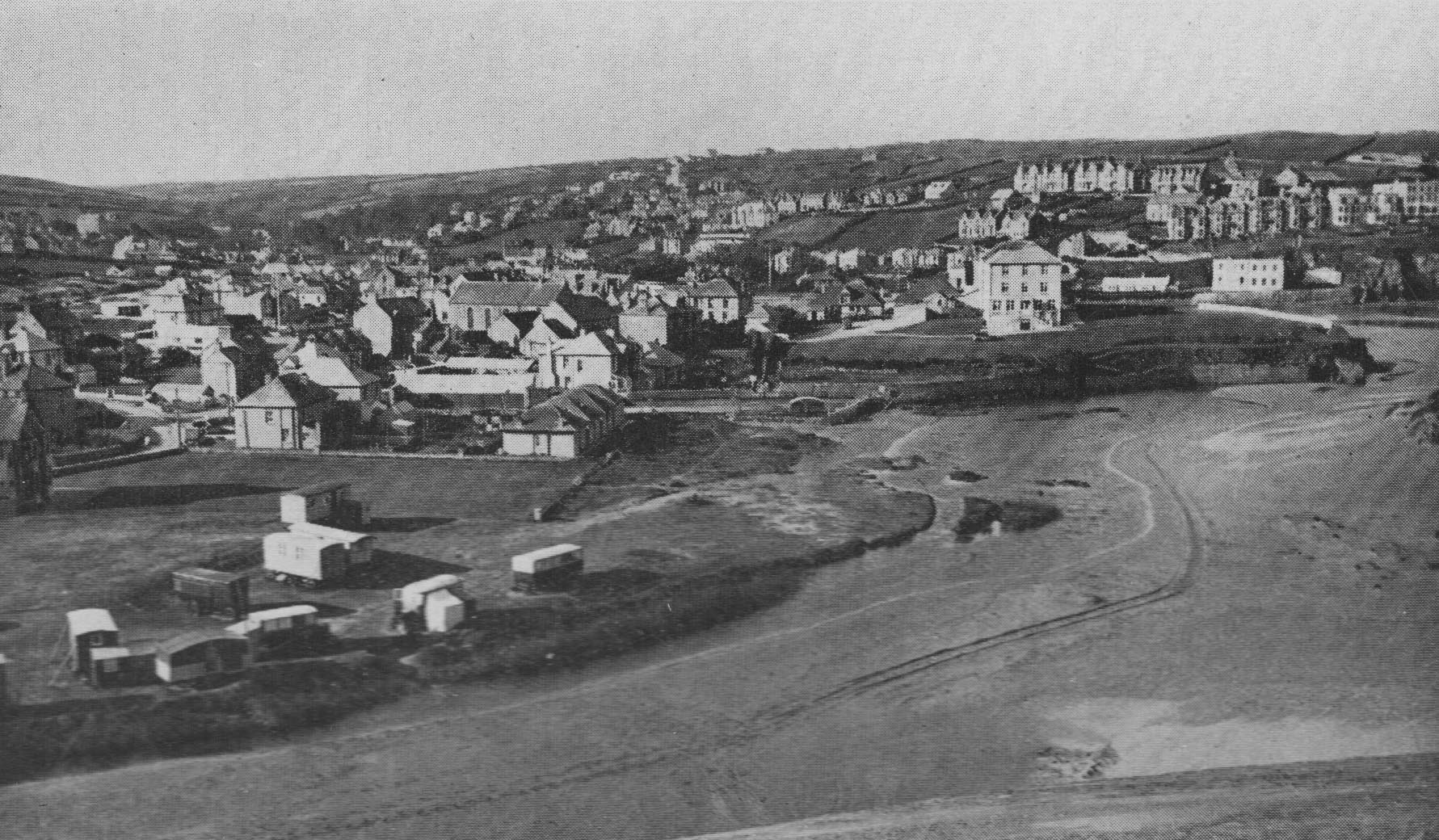
The fate of Perranporth was thus decided and it gradually assumed its present day artistic aspect. Now, instead of a vast scene of unsightly waste material, mine houses and machinery, it presents a cleanly, restful and inviting appearance to the world at large.
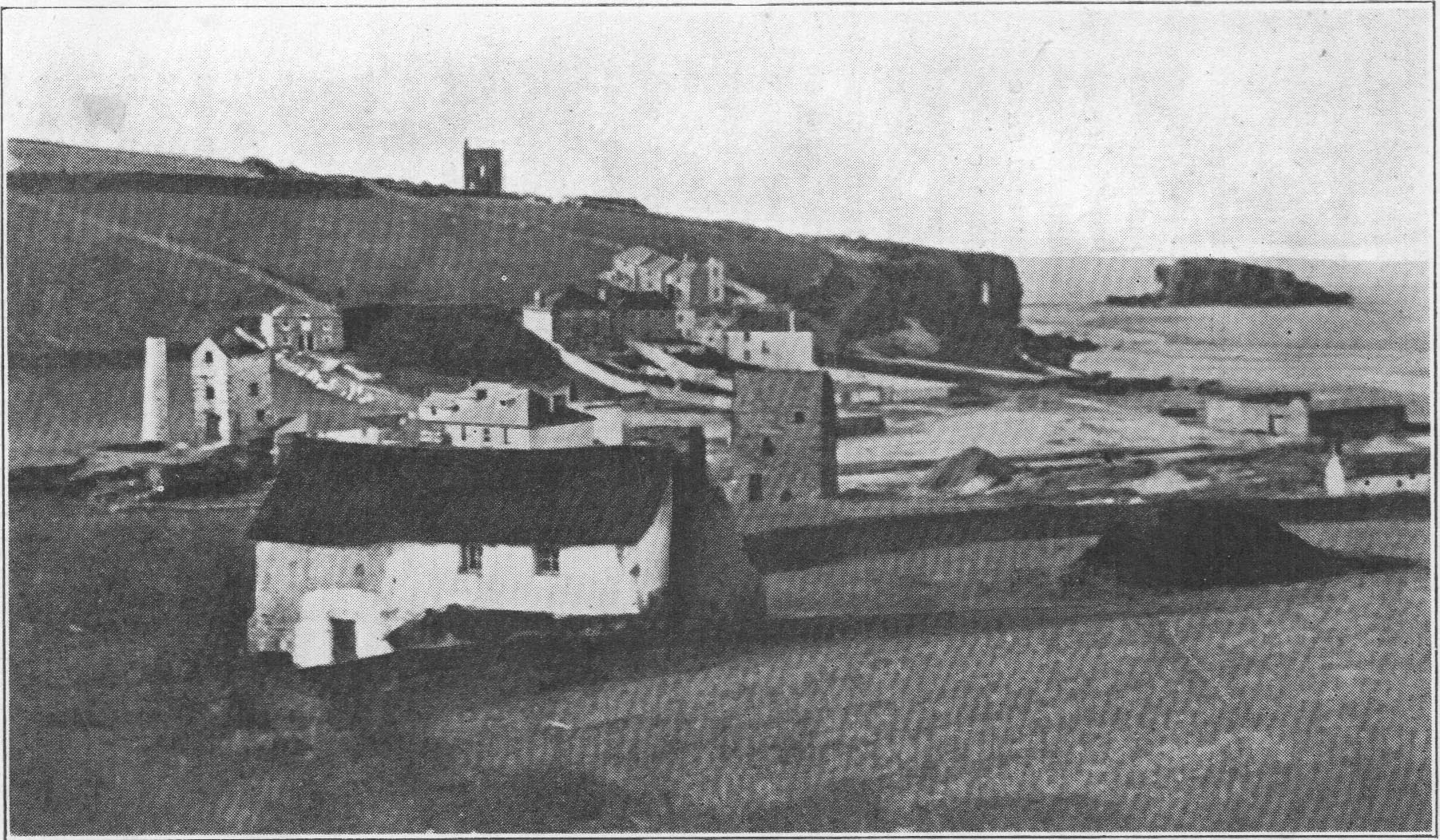
Indeed it would be difficult to convey to the more recent resident or visitor a tolerably sound conception of the topography of even the year 1870, for at that period all the wastage caused by the mining operations still remained. True, all mining machinery and equipment had been removed, as had also all saleable material, leaving only the gaunt but stripped engine houses with their high chimney stacks, and the roofless mine buildings, to render the scene one of desolation: to say nothing of the unsightly and immense accumulaion of waste rock in hillock form, excavated from the various mines over a long period
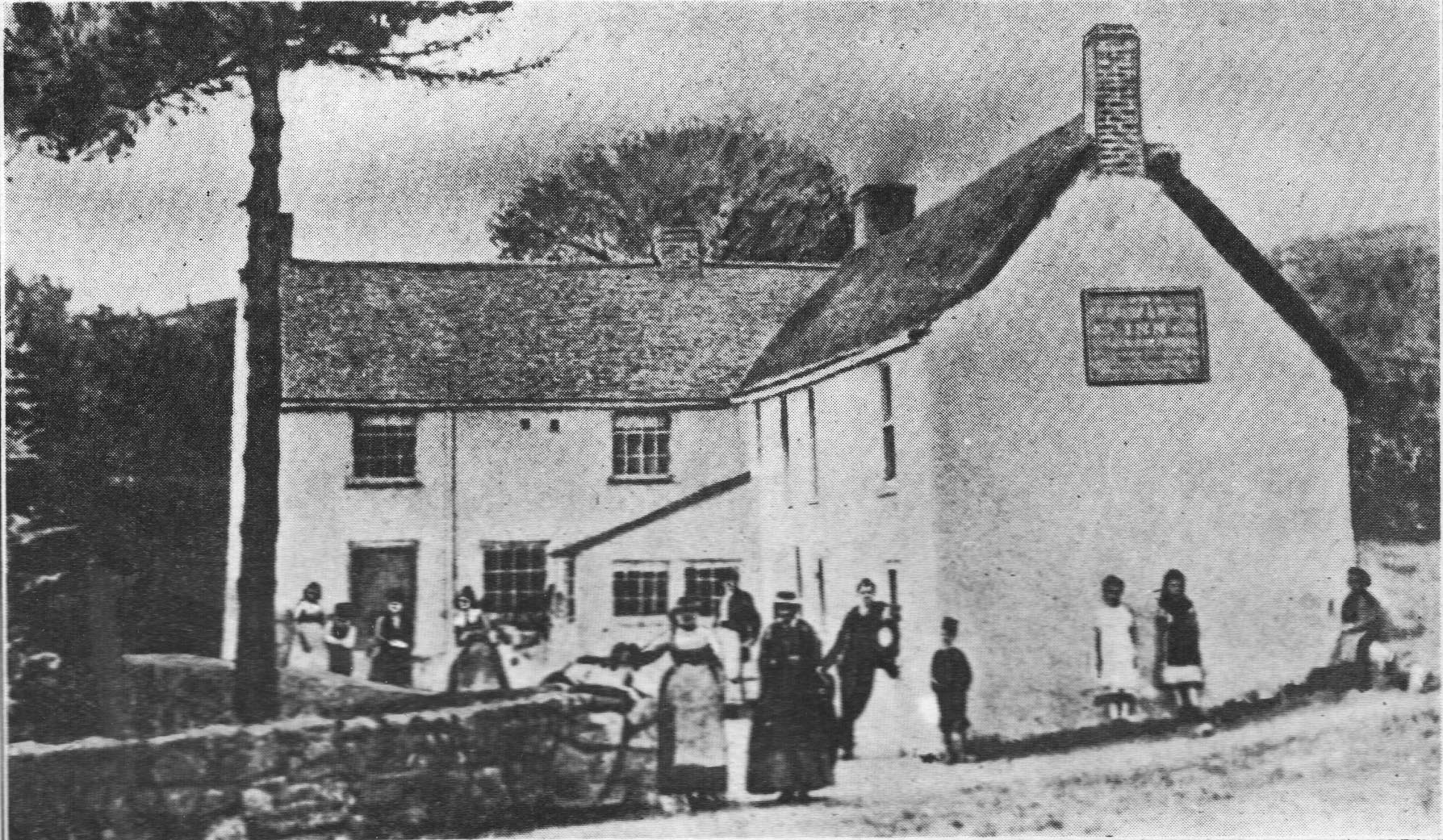
In this connection it may be well to give some idea of the land occupied by the establishment for the crushing and concentrating of the minerals produced preparatory to marketing them. A considerable portion of the richer mine ore which required only primitive hand breaking and sorting would be carted in its crude state to St. Agnes Quay, and thence shipped by sailing craft of, say, 150 tons burden, direct to the smelters in Wales and the cargo on the return journey would be coal for the mines' consumption. The Great St. George and Perran United Mines establishment was situated where the pioneer tennis court field now is, and included all the present built-on site and garden land, adjoining what had been known as the “Miners' and Seiners' Inn,” now the site of the Perranporth Hotel. (See outside back cover). Every inch of this area was literally covered with heaps or masses of what in mining parlance would be “raggings and skimpings,” viz. mined rock, having been subjected to the process of crushing and jigging by specially adapted machines, the saleable
The source of this water for power supply and use in the mineral separation was at a point three miles distant up the Perrancombe valley. The water of the numerous springs and marshes, at a greater elevation at the locality known as "Silver Well," was conveyed by ditching along the hillside approximately in the line of the present Great Western Railway. At the distributing end of the water race - which had to be at a considerable height in order that the flow should be over the water wheels-an aqueduct had been constructed to carry this volume of water at an elevation to cross the present highway and the river situated near the foot of Nanpara Hill. This was before the alteration by the Great Western Railway of the direction of the road which now leads to the little church. These aquaduct "launders" crossed over to the "Churk" pile to the ditching on the hillside at the wheel sites. This ditching and water course originally went far beyond this terminus and eventually to the sea by crossing the site of the Tywarnhayle Farm just beneath the present Tywarnhayle Road.
Perhaps I may be pardoned for mentioning here the following personal incident. When I was about six years old I was playing with other boys on this elevated aqueduct
The Mine's General Offices belonging to that Group of mines still exist, facing the site of the deserted Works on the Tywarnhayle Hill known as St. George's House; now owned by Mr. Kitto.
The "Gounce" Mining Section occupied the area on which now stands "Piran House" — originally built as the office of the "Gounce" Mineral Section of the Wheal Leisure Mine and used by my Grandfather, John Roberts —[7] the site of the present "Pentrig House,"[8] the whole of the section adjoining Tywarnhayle Hotel and the plot of ground seaward from "Piran House" where now stands the Stork Restaurant with its picturesque gardens, also all the land down to the river.[9]
The installations presented an appearance similar to any other mining centre of that time with the exception that, evidently owing to insufficient water power, a large steam-driven engine of Cornish type was installed for the purpose of crushing and classifying the mineral ores. A photograph taken in 1840 shows the details of the position
The Great Wheal Leisure Mines, with a limited surface area, had the whole of its leased surface entirely occupied either by refuse dumps of mine material or crushing and concentrating equipment. It is the mine situated farthest east and extended approximately to the Tywarnhayle Bridge and adjoined the limits of the Great St. George Mines, and included the "Gounce" extending to the neighbourhood of the Ponsmere River. The Central Engine pumping shaft and the centre of the Works generally, may be defined as the site of Mr. W. H Tremewan's seed stores, the Roman Catholic Church, Sully's Emporium and the business houses along the same street.
We have recently carried out an extensive town sewer drainage in accordance with the Public Health Act, delivering the sewage by pressure over the tops of the western hills, and down the declivity to the cliffs and the sea.[14] I have repeatedly asked myself the question: "How many to-day have a working knowledge of the existence of a perfect and adequate outlet to the sea from the central area of Perranporth, namely the existing ancient deep drainage level?" Through this a much larger volume of water, pumped from the mines, was once passed to sea level at the rate of many thousands of gallons per minute. This tunnel, which for decades has effectively drained the surface water and for the past thirty years most adequately drained the sewage from quite a number of houses, was produced by the exigencies of mining and is now the one valuable legacy of the old mine's expenditure. Strange to
Many towns have found a vast expenditure on different methods of getting rid of sewage necessary — Newquay is a case in point — but it may be said that, with a little modification our forebears unwittingly prepared the way for us; self-delivery obviating the annual overhead expenditure on power delivery and discharge. The survey plans of the mines and of the waterway are in the possession of the writer and free access to those might have been had at any period for the purpose of careful study.
Hitherto I have dealt with the copper producing area of Perranporth, now I will touch briefly on the tin bearing zones of the same neighbourhood, each zone having its
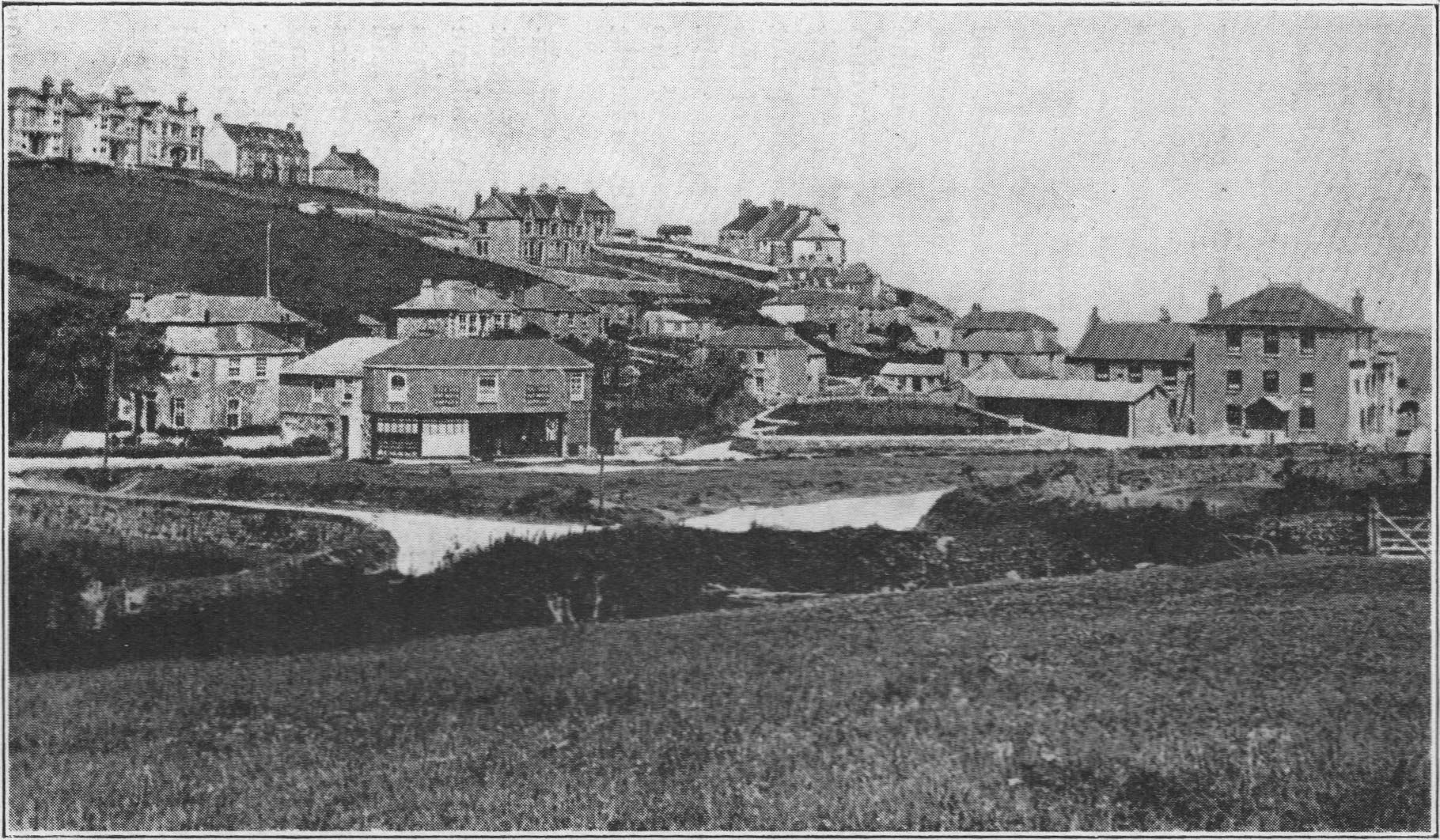
There are four or five houses at Hendrawna in the vicinity of the present Great Western Railway station just below the site of which used to be a favourite well of water supplying the few houses; this was also the landing spot for passengers by boat. When my late father was paying his attentions to a young woman of that place (who afterwards became my mother) he was returning home to Perranporth one moonlight night when he observed what was apparently a flock of wild duck alight at the well site. Early the following morning he took boat and gun and by good luck managed to bag six of the ducks. When he went to see his lady love that evening his prospective father-in-law remarked that his ducks had not come home as usual and my father gathered that he had bagged the old gentleman's domestic ducks. Whether he confessed to this, or not, I do not know but the incident was related to me by my maternal grandfather himself.
Although Ponsmere Bridge may possibly have been constructed centuries ago, it served only for the outlet of the lake water. The cutting of the deeper line of ditch and river through this moorland gradually drained the lake, but it still remained a watery marshland. The only vehicular highway then existing between Perranporth and Bolingey was over the hill from “Jan Jacka's” Corner,
The first area coming under this notice is the sea-frontage and promenade with the adjacent lands in the rear. This was jointly in the gift under the deeds of transfer of His Royal Highness and the Lord Lieutenant of the County dedicated to the parish of Perranzabuloe in perpetuity, and not, as it has been supposed by some, exclusively to Perranporth. It was, in the first instance, transferred in the year 1910, and the interest vested in eight nominated Trustees (coming under the Trustees Act) approved of by the donors and by the populace of Perranzabuloe. The conditions embodied in the transfer were that the land was to be modelled and exclusively used for the purpose of decorative public gardens and recreation grounds, with a strict condition that no buildings were to be placed on any portion of the awarded land; and with the conveyed emphasis in the wording following: "And for no other purpose whatsoever." Such are the conditions under which the land was conveyed and vested in the care of the aforesaid Trustees by the donors in good faith. These Trustees are now dead, but in their lifetime the conditions were rigorously observed. In the year 1921 further Trustees were nominated to replace the deceased members. (It may be that one, if not two, of the former eight Trustees remained). At this period the grant was ratified, embodying the whole of the transferred conditions of the gift, as in the original transfer of the year 1910.
To the stranger or to those unacquainted with the small granite obelisk erected on the promenade and bearing the inscription that it was erected to the memory of the wife of one of the benefactors, in whose memory the gardens were also presented, it must be pointed out that this is an erroneous inscription, This benefactor subscribed £300 towards a fund collected for the reclaiming of the foreshore, the making of the seawall and promenade and preparing the grounds for modelling the gardens.
It is but fair to remark that many of the Trustees are dead, not only those of the year 1910, but also some of those appointed in 1921.
The two covenants have since the year 1921 been so drastically abrogated without a semblance of authority from either the donors, the subscribing parishioners, or the Charity Commissioners, that the objective and dedication have been inconceivably and drastically violated, and if permitted the transfer instrument will become totally invalidated and inoperative.
Suffice it to remark, in view of the efforts of the departed, whose aims were conceived and carried into effect free from all such entanglements, that the oldest native and the well-wisher cannot but record this abrogation as a blot on the escutcheon of the fair name of Perranporth.
BATHERS AND SURFING.
A few precautionary hints in connection with the peculiarities of our seashore may not be out of place and perhaps of some value to those who may care to observe them. Memory recalls from my youthful days my vivid escapes and hardly-earned experience which taught me that caution is necessary. Whilst the breaking seas ordinarily in the summer season are largely uniform, with little perceptible haulout, still there are periodical states known locally as "ground seas." At this time the sea is a little rougher than usual, with an intermittent broken
I come now to a subject which has engaged the regretful attention of Coroners and juries, and where lives have been sacrificed notwithstanding all the evidence of witnesses or of common sense and the published warnings to bathers. The powerful swimmer in many such a situation has as little chance as his weaker brother. Notice warning boards are affixed in conspicuous places, yet again and again a catastrophe occurs. But taken altogether, over a period of many years the number of fatalities is less, considering the great extent of the beach, possibly than that of the average of seaside resorts of the north coast of Cornwall.
The matter to which I would draw the express attention of the bather who desires to bathe off Flat Rocks and from High Cliffs, usually more lone and not so freely patronised as the western beach, is this. The locality is usually covered with irregularities and corrugations of the beach surface by what are locally known as "vellows" which are general on flat plane beaches. They originate in deep sea water, a good distance beyond the lowest ebb-tide mark; their
In my youthful days I had a number of these experiences both in bathing and when net fishing by boat at night in the surf with my colleagues - the darker the night, usually the better the take of fish. Off the locality indicated was our favourite place for the catch of bass, peel, turbot, etc. Suddenly getting into one of these "vellows" with the extended net the haul-out would carry the net bagways outward, and many a time in the darkness I have lost my hold of the headlines of the net, and been cast upon the waters, not unlike flotsam and jetsam in deep water. I was a strong swimmer but; realising that I had plunged into a "vellow," I never attempted to swim inwards towards the shore, striking off sideways instead either to the east or to the west and at right angles to the line of the "vellow;" within a short distance this would land me on to the banks of the channel in safety. In such a predicament the main thing is to keep one's presence of mind and to avoid excitement. It would be utterly unwise and useless to attempt to swim against the current; it would only exhaust one's strength and collapse would follow quickly.
The flatness of the beach, causing the long succession of surf, together with often a sudden change in condition of the sea, is a drawback to the pleasure of boating. We might go off in the morning with a smooth sea and little surf, returning in the evening with sometimes a huge quantity of deep sea fish, to find the surf had been thundering on the beach. With the boat headed shorewards, with just enough power on the oars to keep a slow even keel, suddenly a mighty blue billow would break with all its fury, overwhelming us and turning the boat “topsy-turvey,” casting us ashore as wreckage but none the worse for our sousing. The only regret was the loss of our day's fish. Of my generation, alas, only one is left, my oldest and my most respected and genial friend of a lifetime, Mr. William Henry Tremewan, whose rendering of Cornish stories in the vernacular and with expression has delighted many.[15] No matter what mishaps might have overtaken us we were ready the next day, if the surf was suitable, to repeat our experiences. But withal, I strongly urge those who may be unacquainted with the tides and surf to observe and to be guided by the warning notices posted in conspicuous places, for by doing so they may be as “safe as a gig”.
It may not be out of place, and may perhaps prove instructive to those who are interested, to reproduce the correct names or designation of places on the sea coast in the immediate vicinity, both east and west of Perranporth, for a distance, say, of two miles on either side of this centre and commencing from the west.
Cligga Head. This headland promontory has been referred to on divers occasions herein, and needs but little elaboration. From this point we will travel eastward towards Perranporth on the cliff road, and the following objects are all points of interest.
Mawgan Well. Few people today are aware of this natural spring of water, cool and of most excellent quality, as it issues from the adjoining massive granite formation. By the casual observer its location will hardly be noticed. It is on the edge of the cliff nearing Cligga Head, and just below the first steep rise in the footpath, close to a little gulley to the left of this footpath. One or two little paths resembling sheep tracks may be observed leading down to it, but in reality these are old disused mine approaches to the well which were in use when the Explosive Factory was operating.
Wheal East Cove: This is the site and sea end of the Perranporth ancient mines drainage gallery which has been referred to in extenso elsewhere. The exit gallery is some eight feet above the sea level in ordinary tides in the far end of the open cove, and just outside this cliff indenture, or cove, is situated the delivery pipe of the recently constructed Perranporth drainage system. The cove is just underneath the pathways and wooden stile and skirts a huge heap of old mine waste rock.
Penwithen Point: will be better recognised as the point near the “Shag Rock” and the two blow holes. These resound with periodical roars of forced evacuated water and spray — the effect of some states of the sea and tide-the water plunges into a cavern underneath the point, partially filling the cavern and thus causing a vacuum with compressed air, the small cliff holes a little above the cavern entrance being the outlets. It is curious and fascinating to watch this happening.
The Meadow: It will be noted that between the two promontories of Cligga Head and Penwithin Point there is formed a curve landways of the cliff edge. In the old mining and pilchard-fishing days this sheet of water used to be referred to as “the Meadow” on account of its usually placid surface, and for the same reason the
Many were the stories relating to Captain Oates, who was virtually the owner of the Great Wheal Leisure Copper Mines situated in the immediate Perranporth area. This individual was one of the mining kings of his day, good fortune which commenced in his “tributing” days following in its wake. His early earnings formed the nucleus of his later wealth, and this is one of many similar examples in the County of Cornwall. He was also the builder of Cot House, on the site of which now stands the Ponsmere Hotel, at that time the only house on the headland. Notwithstanding his great wealth he was a studiously careful old man, although on the whole very charitable to all deserving cases, almost exemplarily so: in his daily life, however, his general attitude to carefulness was perhaps carried far beyond the point to which it should have been. The perfection of happiness to him was in donning old worn underground clothes and lounging about in the mine surfaces : strangers, not knowing him, would pass him without a word.
My paternal grandfather was throughout many successive years his general mines manager and engineer.[16]
Captain Oates was illiterate, especially in business affairs, but wise enough to ask council so he was helped over the stile in all matters of moment. He rose from the rank of an ordinary miner but once affluent he never again returned to the underground mine workings although he became keenly concerned in all that was being accomplished for him. Mrs. Oates was of the same type. They kept a horse and gig for their pleasure, but what delighted Captain Oates most was to prowl around the mine surface in his old underground clothing, and, with a clawed hammer, pincers and hand box, search out old disused pieces of timber, drawing the nails out, straightening them and returning them to the carpenters for further
He also built Rose-in-Vale House in the valley at Mithian as a winter residence. After the cessation of the mines he still pottered about but felt very lonely, so he used to employ all sorts of subterfuges to get my grandfather up with another “pal.” He had some heavy pit-head timbers, formerly used at the mines, conveyed to Rose-in-Vale and would say “To pass the time, Captain Jack, let's go and pit-saw the balks of timber into planks.” This they did with an improvised saw pit, Captain Oates still in his usual old mine clothing, for although he did not possess a pit saw Captain Jack did. They would commence sawing, one above the log, the other below, and Captain Oates driving the wedge to ease the sawing. Of course these old used logs were simply full of nails and other iron so occasionally the saw would strike iron and possibly a few of the teeth would be knocked out. Once when this happened and several teeth were stripped out, causing work to be suspended, Captain Oates, scratching his head, said, “Drat it all, Captain Jack, drat it all, but zaaw away, zaaw away, Captain Jack. Thy zaw: thy zaw”! The saw was ruined but he was very relieved that it did not belong to him. Perhaps the greatest injustice Captain Oates ever did to another was to my grandfather, a faithful and almost life-long associate and the greatest helper in building up his fortune. It was founded on jealously and hatred of contemporary mining interests. Oates told my grandfather that he had stated in his Will that on his decease
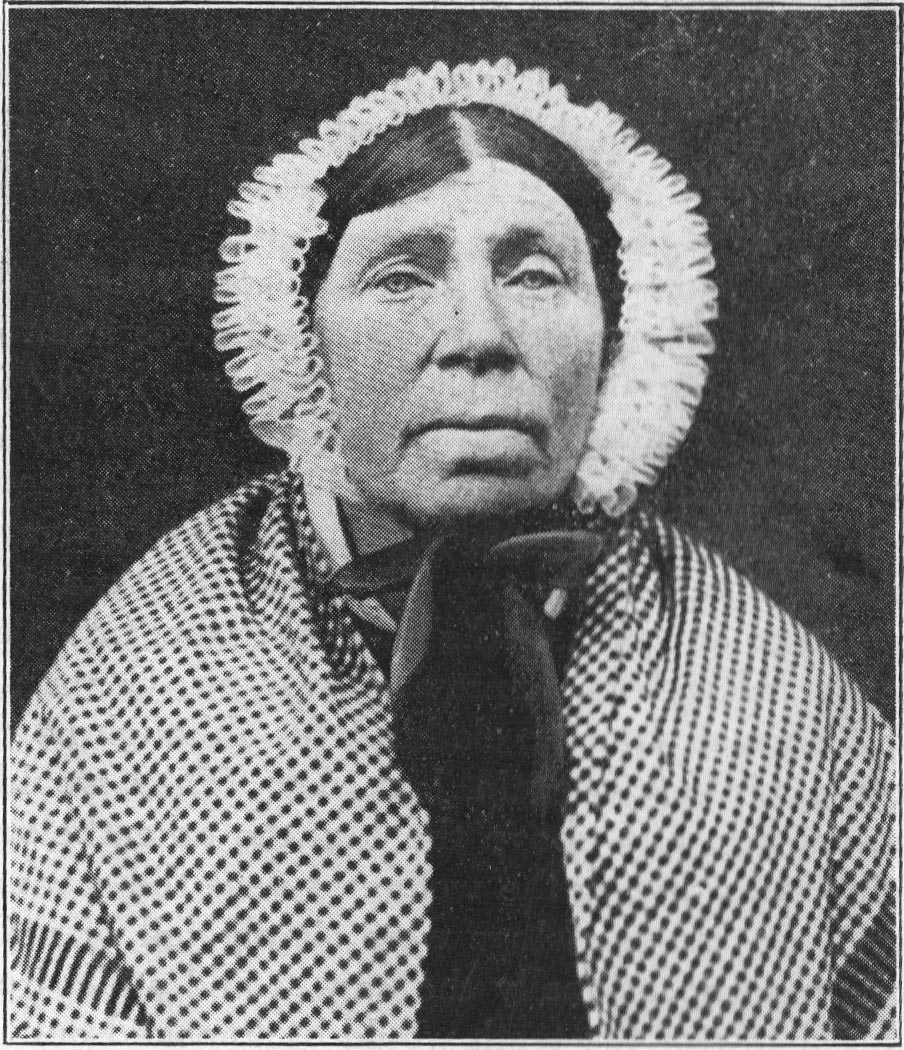
As Oates had no other employment to offer him when the mine ceased my grandfather practically retired from that time as old age was creeping on, but some considerable period after the Great St. George closed down the Cligga Head Mining Section offered my grandfather a very similar post with them, and he accepted it. Captain Oates deeply resented his taking service with his old antagonists (notwithstanding the fact that Oates had won his law action years previously and had £20,000 damages awarded him), and for that reason he eliminated my
It must be conceived that during the period of extensive mining operations this was the only flourishing interest for miles around, all else had to give way to this one and only industry. As a copper producer it ranked as one of the chief mining localities of the county and thousands of men, women, and children were employed therein.
It was only natural that in its following there were also great movements in the matter of supplies, commodities, catering for commercial needs and for amusement, caused by large sums of money being circulated in the mining area and its environment. The operators' wages - of both the underground and surface hands - were paid monthly on fixed days; merchants' accounts were also defrayed at the same time, in accordance with the prescribed cost book system, so that on those days a very animated and busy scene was presented. Tywarnhayle Hotel and bridge was the recognised centre in a commercial sense, but one would never hear the name of Tywarnhayle Hotel locally, it being too much of a jaw-breaking word, simply the word “Tavern” sufficed, as “Going up or down Tavern - or Tavern Bridge?” Tavern ordinarily is expressive of an inn, as we know, but here it bore a special significance as the central mart, whether for business transactions or sport and amusements in the open. quite apart from the functions of a hotel and the distribution of refreshments.
On the days when the mines paid out, the whole of the area of the Tavern surroundings, which was much more extensive than appears to-day, would be literally covered with all kinds of merchandise, “standings,” stalls, booths, with cheap jacks, fortune tellers, pedlars, etc. The trade was in a sense immense for those days, and these nomads arrived monthly as regularly as the sea tides, year in year out, for there were no established shops of sufficient
Mrs. Prout[18] built the Tywarnhayle Hotel and on her retirement from business leased it to a gentleman of the name of Captain Henry Rickard who was a native of the place and a general favourite with all classes. He was also a farmer of the land on the Liskey Hill approach to Perranporth, and for short was spoken of as "Captain Henry." It was much regretted when he was killed through an accident when his horse took fright at the foot of Kenwyn Hill near Comprigney while he was driving to Truro. A small tablet was erected to his memory on the site of the accident and remained there for quite fifty years. He was a genial good sort.
In those days there were no brewery companies and every hotel, inn or "Kidly-wink" brewed its own specific beer, of course all differing to the palate. It was graded by its strength and capacity for intoxicating and there was great competition in this respect. There was also an ancient custom of electing at the Parish Council meetings an officer designated "the parish beer taster," whose duty it was to visit all the pubs and taste the brew. Usually this onerous appointment fell to one with good qualifications, one who not only had the ability to judge, but, what was more to the point, endowed with ample capacity to retain the imbibings. I, personally, knew one such beertaster; he was a small person but, nevertheless, faithfully filled the post. At night near closing time of the inn, and
Captain Henry prided himself that he brewed the very best beer of the locality and having conceived the idea of charging twopence-halfpenny per pint, he was greatly concerned that the miners did not roll up at his place in order to divide their earnings in the usual manner. He heard that they had gone to Penhallow two miles distant instead, as the beer was quite as good, and only twopence per pint, and it had been remarked that Captain Henry had been warned of their intention, also his beer had not the same effect as that of Mother Penhallow. Captain Henry then published the news that he would brew stronger and better even than Mother Penhallow's and would charge them three-halfpence per pint - so tranquility was restored for the time being. The miners would shout jovially, "Drink up, boys! For every pint you drink saving a halfpenny!"
Some seventy years ago a local retired mechanical engineer, an eccentric old body, built himself a fairly large modern house quite close to the beach. Known in the locality as "John," he was a judge of good strong alcohol but otherwise was quite a good member of the community. A clever old man in his special vocation, formerly engaged in the local mines, John came to a decision that two licensed hotels were ample, and, observing that at Truro a number of Temperance Hotels were doing good business, decided to start in that line, for he had a large house and a small family. First, however, he must have a large decorative sign for the hotel, so going to Truro he ordered a sign to be made some twenty-five feet in length and two feet in depth, with the inscription gilded in large block letters. When the sign was ready for removal John went to Truro with horse and cart to fetch it home, but it was of such great length that it
The well-to-do people provided the necessary outfit for the trade, and the working hands gave the best of their hardly-earned experience, their labours being rewarded pro-rata on the division of the accrued profits. The occasions were rare indeed when any local individual would act the spy, for leaving infidelity out of the question, even if they were not themselves engaged in the business, such contraband goods locally distributed at easy and accommodating prices were a boon conferred on the whole community.
Often have I heard my father recount vivid incidents of local smuggling. There were no scruples against it, even those who held religious views carrying on this pursuit as a side issue. I will now relate an exception to the rule against spying which was considered tantamount to betrayal. Among our forebears in this Parish was formed
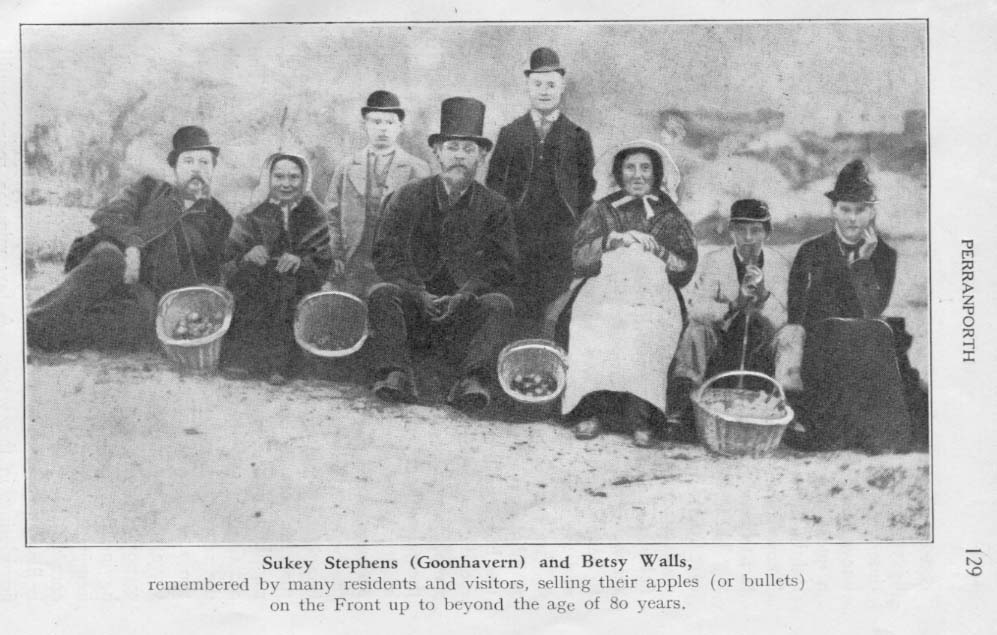
I have often wondered from whom the present day families in this place derive their origin. The family records of many stand out clearly during the past one hundred and twenty years, and how much further beyond it is, of course, not possible to say. In the first place I will mention that my wife's uncle, a boy of seven years, was the last person buried in the cemetery of the old Church in the sands, before the Church's demolition and transference of to-day's Parish Church to the present site in the year 1805.[21]
Three names stand out conspicuously here. These are Higgins, Rippon and Mitchell, and the latter requires some explanation so as not to confuse. For some four or five decades there have been in Perranporth and the neighbouring hamlets at least four families of that name having no connected relationship, at least not known to themselves. Truly, the “Mitchells” were as thick as blackberries on the hedgerows.
The Mitchells, herein especially referred to, were the former mine carriers and later they were 'bus and cab proprietors and, in addition, small land farmers. They ran two 'buses and other conveyances twice a week on market days to Truro, and once a week to the market at Redruth, besides the carrying and cab work, necessitating quite a number of horses. Their abode was the hamlet of Nanpara.
The heads of this old family, I recollect, in my boy-hood, were known as Pally and Peggy. The old gentleman and his spouse had seen a life of hard, industrious work, which had brought them an accumulation of wealth in vehicles, horses, farm stock, etc. They had four stalwart sons who eventually took over the business, but always the homestead was headquarters. Pally was a bowed man and in his later years extremely deaf. His apparel was always that of a waggoner in charge of horses. Peggy was a tall, muscular person, a gaunt woman always masterful in her management and the dictator of every branch of the business. She was a woman to be reckoned with, but nevertheless she was of a most tractable and guiding disposition and always ready to do a kindness. Her husband and sons had to be obedient to her will. Her dairy and cream were universally patronised. Their little farm was up Peggy's lane, which was formerly a lane between two hedges leading from Nanpara to Liskey Hill and the County Council highway.
When Pally became further decrepit from old age two of the sons who still remained at home, engaged in a good deal of horse trading as a side issue. For a long time they had their eyes on a horse in the neighbourhood of Scorrier which they determined to secure, but they wished to exchange one of their horses in part payment. They thought, after long dilly-dallying, that the transaction had been effected but there was a competitor in the field who offered more. So the sons, one winter's night, took their horse to Scorrier and put it in the field where the desired horse was grazing and brought home the horse which they had so long bartered for. However, they